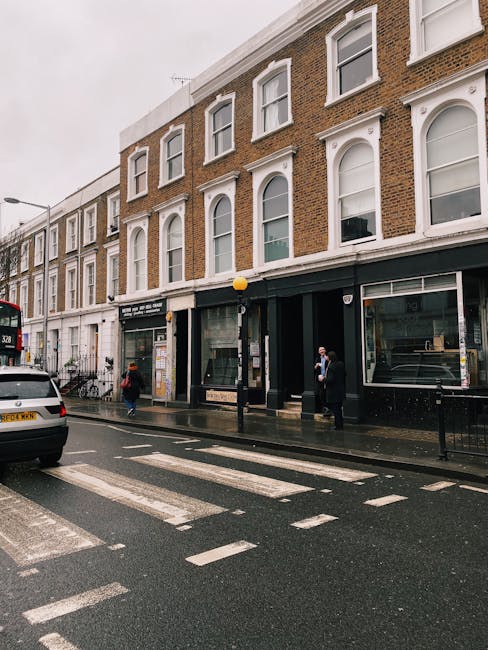
Kensington High Street movers tips for tight access properties: a practical guide to moving in awkward spaces
Moving on or near Kensington High Street can look straightforward on a map, and then the reality hits: narrow entrances, basement steps, shared hallways, resident parking pressure, lift restrictions, and staircases that seem to have been designed by someone who disliked furniture. If you are trying to move from a tight access property, the whole process needs a different level of planning. That is exactly where these Kensington High Street movers tips for tight access properties come in.
This guide is built for anyone dealing with a flat above a shop, a period building with awkward corners, a mansion block with limited lift use, or a house where the front door is somehow always half a metre too narrow for the wardrobe. Truth be told, those are common Kensington moving headaches. The good news? With the right prep, the right order of operations, and the right mover, the day can still go smoothly.
Below, you will find practical guidance on access planning, packing, timing, vehicle choice, specialist handling, and the little things that make a huge difference when space is tight. If you want a broader look at local moving support, you may also find the site's removal services in South Kensington page useful, along with the overview of available moving services. For people comparing providers, the removal companies in South Kensington page is a helpful place to start.
Table of Contents
- Why tight access moving in Kensington High Street matters
- How moving in a tight access property works
- Key benefits and practical advantages
- Who this is for and when it makes sense
- Step-by-step guidance
- Expert tips for better results
- Common mistakes to avoid
- Tools, resources and recommendations
- Law, compliance, standards and best practice
- Options, methods and comparison table
- Case study or real-world example
- Practical checklist
- Conclusion
- Frequently asked questions
Why Kensington High Street movers tips for tight access properties matters
Kensington High Street is one of those places where everything feels close together. That is part of its charm, of course, but it also means removals often happen in difficult building layouts. Period conversions, mews-style homes, flats above commercial units, basement properties, and older mansion blocks can all create access issues that add time, effort, and risk.
Why does that matter so much? Because tight access changes almost every part of the move. A sofa that would glide out of a suburban house might need to be turned vertically, wrapped, carried through a communal corridor, and lifted carefully around a bend. A fridge that is easy in theory can become a two-person puzzle in a stairwell. Even the removal vehicle choice can change if parking or loading space is limited.
There is also the human side. People often underestimate how tiring it is to move through a narrow route repeatedly, especially if you are already juggling keys, neighbours, building rules, and a long day. A move that is not planned for access can become noisy, frustrating, and needlessly expensive. And nobody wants that on moving day, not when the kettle is boxed up and you just want a cup of tea.
For local context, it can help to understand the type of housing and movement patterns in the area. The Kensington living-area guide offers a useful local perspective, while the Kensington real estate market article is a good reminder that flats and period properties remain a major part of the local picture.
Expert summary: Tight access moves are won before moving day. The more you plan the route, measure the awkward points, and match the vehicle and crew to the building, the less likely you are to face delays, damage, or last-minute panic.
How Kensington High Street movers tips for tight access properties works
In practice, moving a tight access property is about removing uncertainty. A good mover will want to understand the property before arrival, then build a plan around the route in and out, the size of the furniture, the parking conditions, and the loading time available.
The process usually starts with a survey or at least a detailed discussion. You will be asked questions such as:
- Is the property on the ground floor, upper floor, basement, or split level?
- Are there stairs, a lift, or both?
- How wide is the main entrance and are there tighter internal turns?
- Is there nearby parking or a loading bay?
- Are there building rules on moving hours, lift protection, or floor coverings?
- Do you have bulky items such as wardrobes, beds, pianos, or large sofas?
Once those details are known, the mover can decide whether a standard removal van is suitable or whether a smaller vehicle, shuttle run, or a more flexible man with van service in South Kensington makes more sense. In some cases, the answer is not one single vehicle but a mixed approach, especially where access is tight but the load itself is modest.
There is also the packing stage, which is far more important than many people think. In a cramped building, a poorly packed box becomes more than an inconvenience. It slows everyone down and creates handling risk. Using the right packing and boxes service can make the whole move feel calmer and less chaotic.
Then comes the route management side: protecting the property, guiding items through the best path, and coordinating with neighbours or building management where necessary. That last part can feel a bit boring on paper, but in real life it saves headaches. A few minutes spent on access planning is often worth an hour on the day.
Key benefits and practical advantages
Done properly, planning for tight access does more than prevent disasters. It genuinely improves the moving experience.
- Less damage risk: Careful route planning reduces scuffs, dents, broken handles, and stairwell knocks.
- Faster loading: When movers know the access points in advance, they can work in the right order without hesitation.
- Lower stress: You are not standing at the doorway wondering whether the sofa will fit. Well, less wondering anyway.
- Better vehicle choice: A smaller van may be quicker and more practical than a larger lorry in a restrictive street.
- Improved neighbour relations: Planning around quieter times and keeping shared areas clear helps avoid awkward exchanges.
- More accurate quotes: The more the mover understands, the less likely you are to face avoidable extras caused by poor assumptions.
Tight-access planning also helps with specialist items. If you are moving a large antique cabinet, a glass table, or a piano, you need a mover who understands the angles, the lifting points, and the space required to manoeuvre safely. For example, someone moving a grand piano out of a basement flat should not be improvising at the front door. Specialist support such as piano removals in South Kensington exists for exactly that reason.
If the move is happening as part of a wider life change, storage can also be a smart pressure-release valve. A delayed completion, refurbishment, or staged move often becomes easier with storage in South Kensington in the mix.
Who this is for and when it makes sense
This kind of advice is for anyone whose move involves restricted access, but some people will find it especially relevant.
- Flat movers: Upper-floor flats, basement flats, and converted buildings often have the tightest access points.
- Families in period homes: Victorian and Edwardian houses can be beautiful, but the stairs are not always forgiving.
- Professionals moving near the High Street: Busy streets and timed loading windows can make day-of logistics more delicate.
- Students and sharers: Quick moves often involve fewer items, but the building access can still be awkward.
- Office teams: Tight corridors, lifts, and shared entrances make business moves surprisingly tricky. If that is you, see the office removals page.
- Anyone with bulky furniture: Beds, wardrobes, sofas, dining tables, and exercise equipment are the usual suspects.
This also makes sense if you are moving at short notice. For example, if completion times shift or a lease ends sooner than expected, a more flexible setup such as same-day removals in South Kensington or man and van support may be more realistic than a full-scale lorry move.
And yes, sometimes the move is tiny on paper but still complicated in reality. A few boxes and a sofa can become a logistical puzzle if the building has a narrow stairwell, a strict porter, and nowhere to park. Small move, big headache. Classic London, really.
Step-by-step guidance
If you want the move to feel controlled rather than chaotic, follow this order. It is not glamorous, but it works.
- Walk the route in advance. Check the front entrance, stairs, landings, lifts, and the route from the vehicle to the door. Note the tightest corners.
- Measure the awkward items. Do not guess. Measure wardrobes, beds, sofas, desks, and appliances, including protruding handles if relevant.
- Check parking and loading access. Find out where a van can legally stop and how far the carry will be. In Kensington, that distance matters a lot.
- Tell the mover about restrictions early. Share access codes, lift bookings, time windows, and any building rules. A good mover can only plan well if they know the real situation.
- Decide what should be dismantled. Beds, tables, and some wardrobes move more safely when partly taken apart before the crew arrives.
- Pack for easy handling. Use sturdy boxes, avoid overfilling, and keep heavy items in smaller boxes. Your back will thank you later.
- Protect surfaces. Use coverings for floors, corners, and bannisters where needed. If the building management requires it, follow that early rather than improvising.
- Create a loading order. Put essential items, fragile items, and awkward furniture in a sequence that makes sense for the access route.
- Keep the hallway clear. Shared spaces need to stay safe and open. A cluttered corridor turns a tight move into a messy one very quickly.
- Build in buffer time. Tight access takes longer. Always. If your plan assumes a perfect, wide-open, unobstructed route, it is probably too optimistic.
If you are moving from a flat, it can also be worth reviewing whether a more specialised service is a better fit. The flat removals page is especially relevant where lifts, staircases, and communal access are all part of the equation.
Expert tips for better results
Here is where the small gains really add up. These are the kinds of details that separate a tolerable move from a surprisingly smooth one.
Choose the right vehicle, not the biggest one
A larger van is not automatically better. On a tight Kensington street, a smaller, more manoeuvrable vehicle may get you closer to the entrance and reduce carry distance. That can save time and lower the chance of damage. For some jobs, a dedicated removal van in South Kensington is the practical sweet spot.
Use dismantling strategically
People often dismantle too much or too little. The goal is not to flatten everything into parts. It is to remove the pieces that block angles or create carrying problems. A wardrobe door removed in advance, for example, can make a huge difference when turning through a narrow hall.
Label by room and fragility
Labels save time, but in a tight property they also save repeated shuffling. Mark which boxes need to come out first, which should not be stacked, and which room they belong to. It sounds basic. It is. And yet it helps more than fancy moving tricks.
Keep one clear loading lane
When movers keep stopping to move boxes out of the way, the whole day drags. A clear lane from the door to the van is one of the simplest ways to keep momentum.
Ask about insurance and handling standards
Tight access naturally increases the chance of bumps and awkward lifts. That is why it is sensible to understand what protection and handling standards the mover follows. The site's insurance and safety information is a useful reference point.
Have a plan B for bulky items
Sometimes the biggest piece will not go the main route. A window lift, balcony removal, or partial dismantling may be discussed, but only if it is safe and appropriate. This is where experienced judgment matters. Not everything can or should be forced through.
A quick human note: on the worst moves, the problem is usually not the heavy item. It is the tiny thing nobody mentioned. A rail, a step, a locked gate, a delivery van parked at the wrong moment. The devil really does live in the details.
Common mistakes to avoid
Most tight-access moving problems come from avoidable mistakes. These are the common ones.
- Guessing measurements: "It should fit" is not a plan. Measure properly.
- Not checking building rules: Some properties need lift bookings, floor protection, or specific moving windows.
- Using oversized boxes: Overpacked boxes are harder to carry, harder to stack, and more likely to split.
- Ignoring parking constraints: A van that has to park too far away can slow everything down.
- Leaving dismantling too late: If a bed frame still needs tools on moving morning, you are already behind.
- Underestimating specialist items: Pianos, large mirrors, art, and antiques need more than ordinary handling.
- Failing to mention access problems in the quote stage: This can lead to the wrong crew, wrong vehicle, or wrong time allowance.
A related mistake is choosing a removal service purely on price without asking how they handle tight access. Competitive pricing matters, naturally, but the quote should reflect the actual job. You can read more on the company's competitive prices page, and if you are comparing options in a broader sense, the pricing and quotes information is worth a look too.
And a small reality check: if a quote seems strangely cheap, ask why. It may be a good deal, or it may simply not include the awkward bits yet.
Tools, resources and recommendations
Not every move needs specialist kit, but tight access usually benefits from a few practical tools and services.
| Tool or resource | What it helps with | Why it matters in tight access properties |
|---|---|---|
| Measuring tape | Checking furniture, doorways, and landings | Prevents guesswork and last-minute surprises |
| Furniture covers and blankets | Surface protection during lifting and turning | Helps protect walls, bannisters, and furniture edges |
| Quality packing boxes | Safer lifting and stacking | More control in narrow hallways and stairwells |
| Basic dismantling tools | Removing legs, doors, or frames | Can make a bulky item manageable |
| Temporary storage | Handling delays or phased moves | Useful when access and timing do not line up neatly |
| Trusted mover with local experience | Planning, lifting, and route control | Probably the single biggest factor in a smooth move |
If you are still deciding what kind of mover fits your situation, the page on man and van services is useful for smaller or more flexible jobs, while house removals makes sense for fuller domestic moves.
For a wider sense of the company and how it works, you can also review the about us page. It is not flashy, but that is often a good thing. You want clarity, not marketing fog.
Law, compliance, standards and best practice
For most people, the legal side of moving is not complicated, but it still deserves attention. Tight access properties often sit within buildings that have their own rules, and movers should respect them.
In the UK, a sensible moving process usually involves the following best-practice areas:
- Health and safety: Safe lifting, clear walkways, and careful handling of awkward items are standard expectations, not nice extras.
- Insurance awareness: You should know what cover is in place and what exclusions may apply.
- Property and communal area care: Shared entrances, lifts, and hallways should be protected where appropriate.
- Clear communication: Building managers, neighbours, and the removals team should all know the basic timing.
- Privacy and security: Access codes, keys, and personal data need sensible handling.
The company's health and safety policy and payment and security information are useful reference pages if you want to understand how a provider approaches those basics. If you have specific concerns, it is also reasonable to ask how complaints are handled; the complaints procedure gives a good signal that customer issues are taken seriously.
One more thing: always check the mover's terms and conditions before agreeing a booking, especially if access is unusual or you suspect the move might take longer than a standard job. That is just sensible housekeeping.
Options, methods and comparison table
There is no single best moving method for every tight-access property. The right choice depends on how much you are moving, how awkward the building is, and how much flexibility you need.
| Method | Best for | Pros | Trade-offs |
|---|---|---|---|
| Full removals service | Larger homes, many items, complex access | Most support, best for heavy or mixed loads | Usually the highest cost and most planning needed |
| Flat removals service | Apartments, mansion blocks, basement flats | Designed around stairs, lifts, and shared access | May still need careful surveying for difficult items |
| Man and van | Smaller loads, flexible timing, short distance moves | Agile, often practical in tight streets | Less capacity for very large or heavily specialist moves |
| Specialist item removals | Pianos, antiques, fragile large items | Experienced handling and better protection | May require more time and specific access prep |
| Storage-first move | Delayed completion, refurbishment, phased relocation | Reduces pressure when dates are uncertain | Involves an extra stage and planning step |
If you are moving with a more modest load but a difficult entrance, the flexibility of a smaller team can be the smartest route. If you are moving a family home with multiple rooms, the full-service route is usually easier. A business move, meanwhile, often sits somewhere in the middle and can benefit from a tailored plan rather than a one-size-fits-all package.
Case study or real-world example
Here is a realistic example. A couple moving from a first-floor flat near Kensington High Street had a sofa, double bed, dining table, two bookcases, and about forty boxes. The flat had a narrow staircase, a small communal landing, and a loading space that could only be used for a short window in the morning.
Instead of turning up and hoping for the best, they measured the sofa and the stairwell, removed the bed frame in advance, and booked a smaller vehicle that could park closer to the entrance. They also packed books into smaller boxes rather than filling large ones with heavy items. That sounds minor, but it changed the pace of the day a lot.
When the team arrived, the move still took effort. Of course it did. But the awkward bits were manageable because the plan matched the property. There was no drama at the stair corner, no panic over the sofa, and no last-minute search for screws that should have been kept in a label bag. Just a steady, controlled move. Not glamorous, but satisfying.
The difference was not luck. It was access planning.
Practical checklist
Use this checklist a few days before the move, then again the night before.
- Measure doorways, halls, stairs, lifts, and the largest furniture pieces.
- Confirm parking, loading space, and any building access rules.
- Tell the mover about narrow entrances, basement steps, or shared corridors.
- Ask whether a smaller van, shuttle, or specialist handling is better.
- Pack heavy items in smaller boxes.
- Label fragile items clearly and keep essential items separate.
- Dismantle bulky furniture where needed and keep fixings together.
- Protect floors and corners if the building requires it or if the route is especially tight.
- Check insurance, terms, and the mover's safety approach.
- Build in extra time. Just do it. You will be glad you did.
If your move is more complicated than expected, do not be afraid to ask whether a staged approach or temporary storage would make things easier. Sometimes that extra step is the calmest option.
Conclusion
Moving from a tight access property near Kensington High Street does not have to be stressful, but it does need careful thought. The buildings are often charming, characterful, and full of awkward corners. That mix is part of Kensington life. The trick is to respect the layout rather than fight it.
Measure properly, pack smart, choose the right vehicle, and be honest about the access from the start. Those simple habits do most of the heavy lifting. If you get them right, the day tends to feel far more manageable, and the move becomes one of those jobs you are glad to have behind you.
Get a free quote today and see how much you can save.
And if there is one final thought to leave you with, it is this: a good move in a tight place is never about forcing things. It is about making the path just wide enough, one careful decision at a time.
Frequently Asked Questions
What makes a Kensington High Street property classed as tight access?
Usually it means the route in or out has restrictions that affect moving day. That could be narrow staircases, small lifts, basement steps, awkward turns, limited parking, or a long carry from the vehicle.
Should I use a full removals team or a man and van service?
It depends on the load and the building. A full removals team is often better for larger homes or bulky furniture, while a man and van can be a smart choice for smaller moves with tricky access. The access itself matters just as much as the item count.
How far in advance should I tell movers about access issues?
As early as possible. Ideally at the quote stage. If you wait until moving day, the mover may arrive with the wrong vehicle, wrong timing, or not enough people for the route.
Do I need to measure my furniture before booking?
Yes, especially for sofas, wardrobes, beds, and appliances. A few simple measurements can save a lot of trouble. In tight access properties, a centimetre can make a real difference.
Can movers help dismantle furniture for tight staircases?
Often they can, depending on the service booked and the item involved. It is best to ask in advance. Some furniture is much safer to move when partly dismantled.
What if my building has a lift but it is very small?
Tell the mover the lift dimensions and any booking restrictions. Small lifts can still be useful, but bulky items may not fit. In some cases, the team may need to use stairs or a different handling method.
Is it worth using storage if the access is difficult?
It can be, especially if the move is phased, the completion date is uncertain, or some items do not need to go in immediately. Storage can reduce pressure and make the day less cramped.
Will a tight access move cost more?
It can, because it may take longer, require a smaller vehicle, or need more careful handling. That said, good planning can help keep costs under control and avoid avoidable extras.
What should I pack differently for a tight access move?
Use smaller boxes for heavy items, keep pathways clear, and avoid overstuffed cartons. Fragile items should be clearly marked, and everything should be easy to lift without awkward balancing.
How do movers protect the property during a difficult move?
They may use covers, blankets, floor protection, and careful route control to reduce scuffs and damage. Ask what protection is included and whether any building-specific rules apply.
What happens if the sofa or wardrobe will not fit through the route?
Experienced movers will usually look at dismantling options, alternative angles, or a different route if there is one. If the item simply cannot fit safely, forcing it is not a good idea. Better to stop and reassess.
Are there special considerations for office moves on Kensington High Street?
Yes. Office moves often involve lifts, shared entrances, time restrictions, and equipment that must be moved without disrupting neighbours or building users. Office-specific planning is worth the effort, especially in busy central areas.
What is the most common mistake people make with tight access properties?
The biggest one is underestimating the route. People focus on how many items they have, but not on how those items will actually leave the building. Access is often the real challenge, not the furniture itself.